Technology
What "Glassbox" AI Means for Lawyers
September 10, 20262 min read
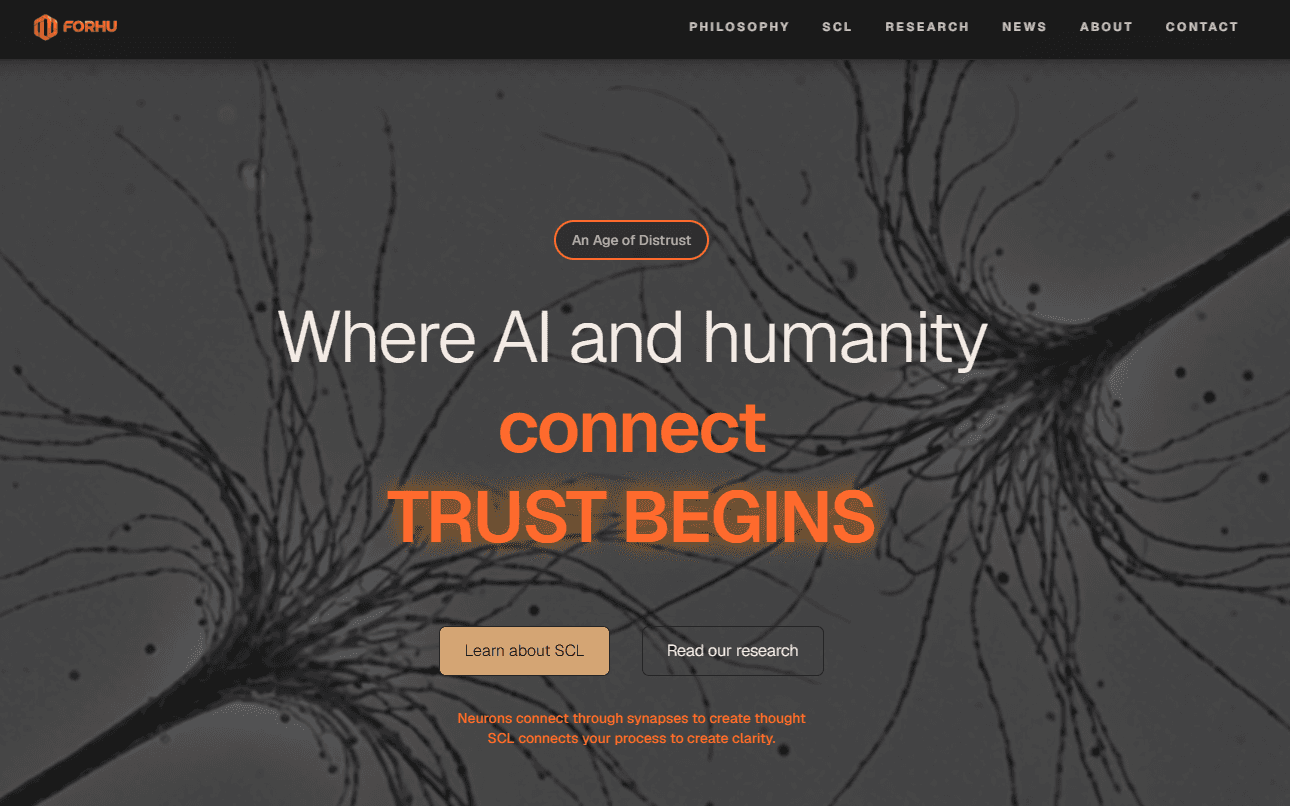
Lawyers are being asked to rely on AI whose reasoning they can't see. That is uncomfortable in a profession built on showing your work. A company called Forhu, short for "For Human," is arguing for the opposite: AI that can explain itself.
The black box problem
As AI gets more capable, it also gets harder to inspect. Businesses, regulators and ordinary users are asked to trust systems whose outputs carry real financial weight and can affect people's lives. When the reasoning isn't visible, so is the risk.
Forhu's approach
Forhu builds around what it calls the Structured Cognitive Loop (SCL). It puts transparency ahead of performance scores. In its view, high performance does not justify an output nobody can understand. Its principles are:
- Transparency is required. A system should be deployed only if it can explain the reasoning behind its outputs.
- Mistakes are data. Hallucinations and logical errors are recorded and used to improve the system's memory and controls.
- Trust can't be patched on. Oversight has to be built into the design from the start.
- Human dignity is a hard limit. Ethical constraints sit inside the architecture, not just in guidelines.
Why it matters in legal work
Most generative AI relies on statistical pattern matching. It writes fluent text but has no firm grasp of what is true, so it can state unverified claims with confidence. Forhu instead combines foundation models with ideas from cognitive science and epistemology. Outputs pass through layers of validation and verification, so a prediction becomes reasoning that can be checked.
For a lawyer, the practical test is the same one you would apply to any junior colleague. Can the tool show how it got to this answer, and can you check it before you rely on it? Forhu's "Glassbox" idea is that the answer should be yes by design.
Sponsored Recommendations
Share this article